

Col. Grigori Aleksandro Aleksandrovich, Retd. claimed his own labeled vodka was radical-free, and one would never wake with a headache in the morning if they drank nothing else. He was trained by the KGB as a chemist. He bragged that when he came in from the field, he trained new recruits. “Vladimir Putin was one of my students. He needed hardening, but when I was through with him, he was as tough as the Japanese steel in their best katanas. He took a special interest in my chemistry classes. I’ll say no more.” The Colonel was the proprietor of the Canarsie Beach Club. A long Japanese field sword- a nodachi, hung behind the bar.
The club is off Flatlands Avenue, halfway between Remsen Avenue and Rockaway Parkway, and the radical-free drinks were $1 less than in comparable Russian venues in Brighton. Over an evening, this could result in significant savings, motivation enough for the serious drinker to spend the extra few minutes driving there rather than propping their elbows in a local bar. Since few Russians are willing to admit to a hangover the next day, Grigori’s claim about his radical-free vodka remained unchallenged.
~ * ~
In any case, this was where Shishi Schinolavitch, aka Shi-Schi, came to drink when he was in New York. He had arranged to meet an old friend there, if a friend of a friend with whom one was never really that friendly can be called an ‘old friend.’
Shi-Schi was installed in a corner booth, a bottle of radical-free vodka on the table in front of him. Next to the bottle were two juice glasses and a plate of pickles. He was patiently waiting for his guest Nicolai Nozdrehavitch, called Nic-Noz by his friends, to arrive.
Shi-Schi was sixty-five and tried his best to look forty-five, applying a black rinse to his hair and plastering it with a pomade he made himself – “It adds body and luster.” If anyone commented, he would say, “It’s my own mix of a custom blend with all-natural ingredients. When I have time, I will patent it and then in my leisure will make millions.” If they made any snide remark he would add haughtily, “Sorry, I can’t let it fall into the wrong hands lest it be reverse-engineered, and all my years of research and trials will benefit someone else. You understand, of course?”
In any case, it had a distinctive scent, and since he often forgot to shower or change his underwear, it was able to cover any offensive body odor. Recently, he had affected a comb-over and considered coloring his hair orange. However, he decided against using a sunlamp or tanning cream, worried that a darker complexion might lead people to think that he had Tatar blood flowing in his veins.
Shi-Schi was running through the details in his head. Plots in the better cemeteries now cost $5000 or more. Some have large annual fees regardless of occupancy. Heirs have moved to warmer places – California, Arizona, Florida – with no intention of ever returning.
He paused, scratched his chin, closed his eyes, and looked up to the heavens. It’s easy to drive through and write down the names of abandoned plots. A box of chocolates gets the cooperation of the receptionist in the office. “Schmooze gets the news, right, Niko?” The question slipped from his lips unconsciously; however, once he’d heard it, he approved and repeated it. “Schmooze gets the news, right, Niko?” He closed his eyes again and imagined taking a formal bow, one that his ample stomach would have prevented.
He was able to think with exclamation points—This makes me exceptional!
For his current scheme, he required financial backing which needed to be done in the utmost secrecy. Kickstarter and GoFundMe were out of the question. He drummed his fingers on the table, picked up and put down the bottle of vodka, was tempted to drink alone, but finally settled on picking his nose when he thought no one was looking.
It was precisely at this moment that Nicolai Nozdrehavitch pushed open the door to the club, stomped his feet a couple of times as if he were bringing in snow from the tundra with his loafers—no socks, it was the middle of June—and looked around. He had memorized the description he’d been given of his host: jowly, a big belly pushing out a shirt no longer white, a waistcoat no longer capable of being buttoned, and hair most likely shiny, combed in a peculiar fashion – as if he were practicing to be an understudy for President Trump. “Of course, unless orange dye becomes available cheaply, his hair would be glistening black, plastered to his head, and held in place by an excess of pomade. You should be able to smell it across the room.”
So, Nic-Noz, having left his eyeglasses at home, stood just inside the door, tilted his head back, and worked his nose like a basset hound – his droopy eyes, and long earlobes completing the picture.
The sound of stamping feet brought Shi-Schi out of his reverie. He could sense his prey without wrinkling his nose. He spotted Nicolai Nozdrehavitch, caught himself from jumping, “Best save my energy for later”, acted like he was trying to catch a mayfly in his hand since he was half out of his seat, and finally completed his movements with a roundhouse wave to the newcomer standing in the doorway. His mind was swift and his recall as good as it had to be in his line of work. He knew Nic-Noz had grown up in Siberia and the habit of stomping snow off one’s boots was deeply ingrained in its inhabitants. Even in June, even in Brooklyn!
He coughed, stood nodding at the short man in the doorway, then extended his hand, palm up, to the empty chair at his table and the bottle of vodka, clearly indicating their equal worth.
Nicolai squinted at the motion until his nose picked up the smell of the hair gel. He reassured himself that this must indeed be the renowned Shi-Schi and made his way across the room.
Shi-Schi pushed the table to one side and came around to hug and kiss his guest in the Russian fashion: hugging on the left, then on the right, back again on the left and then three kisses on the cheek: right-left-right. Then, worried that since Siberia was so far from Moscow, and that the process of greeting dear friends might still be reversed as it was under Stalin’s iron hand, he reversed the procedure: right-left-right, left-right-left. Col. Grigori, seeing all this from behind the bar, thought for a moment that he was watching a tennis match.
“My dear Nicolai Nozdrehavitch, may I call you Nic-Noz? I feel like I’ve known you all my life. Here, sit down; this bottle and the glasses have parched lips, but now that you are here, all is well in the world.” Shi-Schi nervously rushed through his greeting, fretting about minutes lost while his scheme still needed financing.
He quickly filled the juice glasses halfway, then pushed the pickles across the table. “My dear Nicolai Nozdrehavitch—Ah, I forgot already—old friend! My dear Nic-Noz, may we drink to a very successful enterprise, one that will dwarf that of Pavel Ivanovich Chichikov and his mertvyye dushi, his dead souls? Chi-chi, after all, was dealing with czarist Russia and, here we are in the heart of capitalism, nurtured for four long years by the Master of the Deal—whom I’m sure would like to be part of our undertaking since it is his field of expertise; real–estate, but what real estate! Ours for a song. But we must be brave, courageous even. We are Russians after all, and we know of bravery!”
Shi-Schi paused. He had lost his train of thought. To gain time, he pushed the plate of pickles closer to Nicolai. “Kushai, kushai, eat, eat, my dear Nic-Noz.” The white napkins reminded him of shrouds. He relished the Russian word: shroud – саван [savan] – shroud.
To think that someday I too will be buried in a shroud!
Then he dismissed such dreary thoughts and returned to the matter at hand.
“My dear Nicolai Nozdrehavitch, Nic-Noz, drink up, drink up. We have weighty matters to discuss, you and I. There are huge sums that are ours, save for the asking.”
He picked up his glass, tipping it towards Nicolai. They clicked rims. “Твоё здоровье, Твоё здоровье – your health, your health.” Wishes for good health, long life, handsome wives, brilliant children were exchanged, and the glasses were refilled more than once.
Shi-Schi remembered. “Schmooze gets the news, right, Niko?” Nicolai nodded and looked under the empty pickle platter hoping that perhaps one small pickle had escaped to hide under the dish.
“News, my dear Sho-Scho? What news are we talking about?” Nicolai hadn’t eaten, and had been looking forward to a serious conversation over vodka and food, especially the food, food that he thought was on the agenda. Maybe I should ask? I guess I could order something. “Ah, but if it’s news which we can sink our teeth into, now that would be a good bit of news!”
Shi-Schi, who had been leaning forward elbows on the table, bolted upright. “Yes, yes! What have I been thinking? Of course, nothing of importance can be decided on an empty stomach. I’ll call for more pickles, some salted herring, or do you prefer the fish to be swimming in oil? I know, I’ll get both.”
He caught the attention of Col. Grigori Aleksandro Aleksandrovich, Retd. Shi-Shi moved his hand like a fish, held up two fingers, then just one and made it as if he were shaking salt. Next, he swam his hand through the air, pantomimed picking olives and squeezing them. Lastly, he extended his left forearm and made a cutting motion with his right. Grigori mouthed Da and held up two fingers. The bar was busy.
Five minutes later, he stood in front of their table, put down a tray with herrings and a cutting board with a loaf of dark bread and serrated knife, and another bottle of his vodka. He smiled. “Bon appétit.”
Nicolai smiled back, unfolded a napkin, and tucked a corner over the top button of his shirt. “Ah, now my dear Shi-cho, schmooze away.” Sliding herrings of both types onto his plate, he said, “But if you would be so kind as to cut a few slices of that dark bread.”
Shi-Schi sliced the bread first for his friend and then for himself. Now I must explain, keep my wits about me. “It is frightfully simple. We need only buy unused plots in cemeteries—children move out of state, of course no longer children then, they’re unwilling to pay for maintenance on plots they will never use. The office, remember, I schmooze for the news, gives me the last known contact information. No one’s paying to maintain plots, worse yet, paying to put people in the ground, renting reception halls. I find a new buyer, someone needing a plot in a hurry. We each make out when we turn over the plot. A win-win situation as they say in the capitalistic West.” He licked his fingers.
Nicolai wiped his hands on a napkin, and then sipped more vodka. “And for me, you need?”
“Help with the capital. Oh, you needn’t worry. I know you must have many of your own projects going on now, but perhaps amongst your friends, there are some who have access to not insignificant funds, who will find our project of interest. With the proper introduction and backing, I’m sure we will find many willing partners.”
Nicolai was hesitant.
Shi-Schi smiled. “I just need the introduction. A deal is a deal, and everyone wins. It will be the best deal for everyone. People are not getting any younger. And…”
“Ah yes. Not any younger, but you’re really interested in those not getting any older.” Nic-Noz laughed at his own joke.
The vodka had brought soft smiles to their faces and their jowls flowed over their jawbones. They made quite a pair – Shi-Schi’s left eyelid drooped while Nic-Noz’s right eyelid twitched as if hinting across the table, “Don’t fall asleep at this critical point in the evening.”
Shi-Schi got the telepathic message. “Ah, yes indeed, my dear Noz, yes indeed. But surely now that we’ve broken bread together, surely you can at least hint who you think will be amenable to our project? Perhaps it’s Vagolnovitch, the one with the auto showrooms on Church Street, or Kappustanski with the grocery stores up and down Remson Avenue?”
Nicolai smiled, as he played with the breadcrumbs on his plate. “No, neither. But it is fun to see you guess.” The drink had given Nicolai Nozdrehavitch courage. He continued. “And while it would have been nice to have had radishes and butter with our bread—I asked, they considered, but in the end declined… the two bankers, Redushka and Maslovik, the Brighton Bank.”
“So please, dear Nicolai, who do you have in mind? And next time we meet, I promise radishes, butter, garlic, and maybe even caviar. As an old friend, at least a hint.”
“Dearest Sho-Sho,” some of the radical-free vodka was working, “dearest Sho, I think I have already convinced Manilov and Sobakevitch to join our enterprise though, of course, they will need to learn the details. And, of course, we will have to decide on what percentage each of us is to hold, the official rank we will assume in our company – ah, details, details.” A long sigh escaped from his gaping mouth, as if the effort to close it at this point in the evening was proving too much.
“Ah, the details, always the details. But in a week then, shall we say,” Shishi Schinolavitch regained control, “in a week then shall we say, we can all meet here. I’ll have a talk with Grigori; it was his fault we lacked radishes and butter. And besides his vodka, a bottle of his brandy. It’s sweeter, and sweetness opens the spirit and purse, as is well known. In Moscow we have the words for this, but at the moment, they escape me. Perhaps you remember, dearest Noz? Here, it’s been a while since we drank to your health.”
Shi-Schi poured the remainder of the bottle into their glasses, making sure to give Nicolai an extra inch. “Твоё здоровье – your health!”
“Твоё здоровье – your health!” Nicolai felt no pain and stood up to complete this last toast, picturing himself in the role of Vice-President, or perhaps even President. He looked at his empty glass. “Ah, Shi-Sho. The night is still young, but I must go.” And then, throwing out his chest, “I too have many coals in the fire, and some need my attention. But I promise you, next week, we will begin. The graves need our attention and they will get it. You can depend on your dear friend, Noz-Noc!”
“Yes, yes. And, my dear friend, should I have the Colonel call for a taxi?”
“That won’t be necessary, my chariot is just around the corner. I wish to keep our negotiations secret as you suggested. Au revoir, mon ami.”
A casual observer would have seen a tear or two in the corner of his right eye, whether from the effort of speaking French, the twitching of the eye, or the smoke in the room—it would be hard to say.
Shi-Schi returned to the table to retrieve his coat. He stopped at the bar, had a whispered conversation with Grigori who nodded, then walked into the night, making a mental note that by next week he must have brochures from the better memorial parks. No, it would not make any sense to call them cemeteries, cemeteries would call to mind cement.
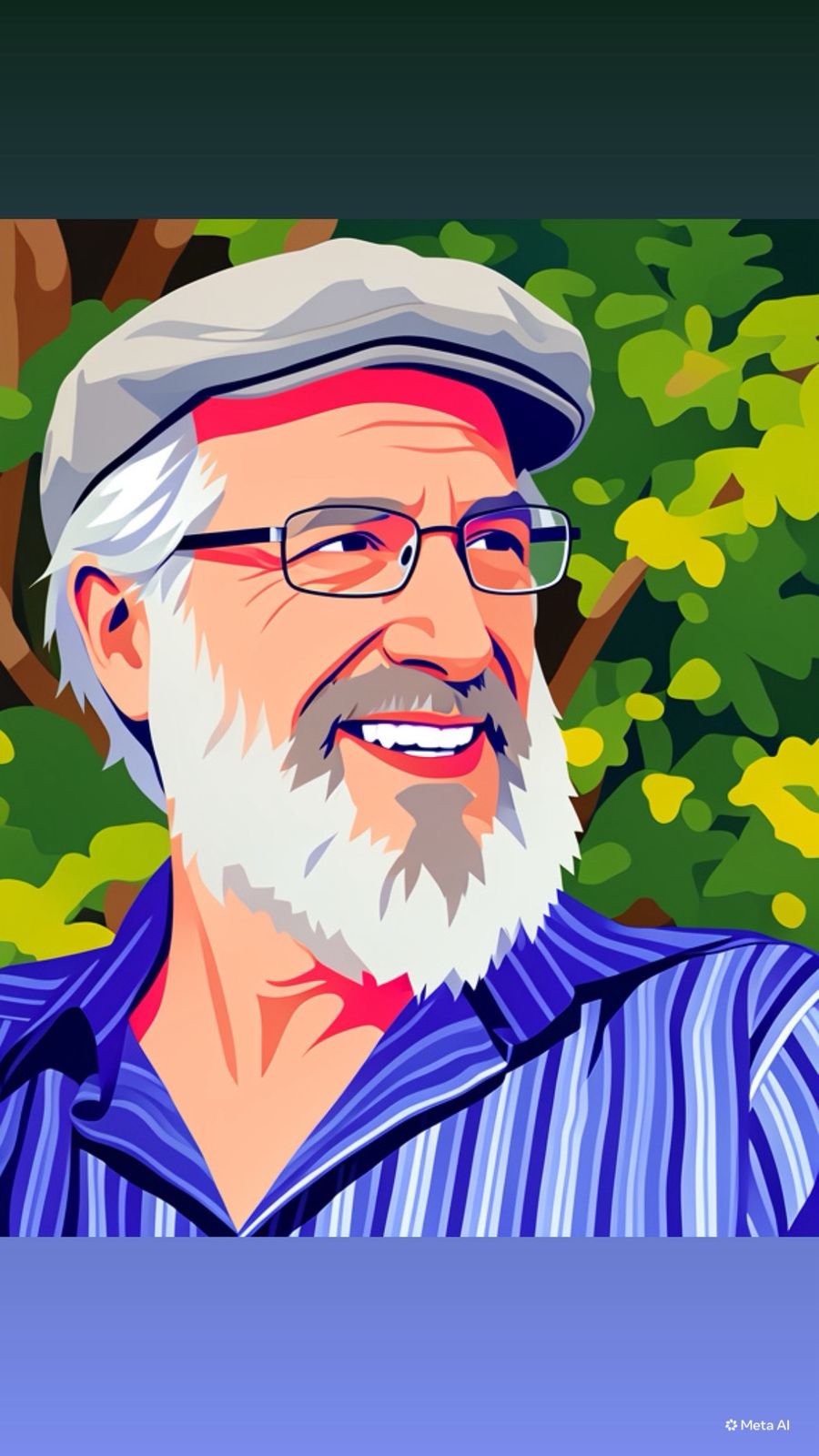
Kenneth M. Kapp lives with his wife in Milwaukee, Wisconsin, writing late into the night in his man-cave. His stories have appeared in more than one hundred publications worldwide and he has been nominated for the Pushcart Prize. He enjoys chamber music and mysteries. Find out more about him here.
