

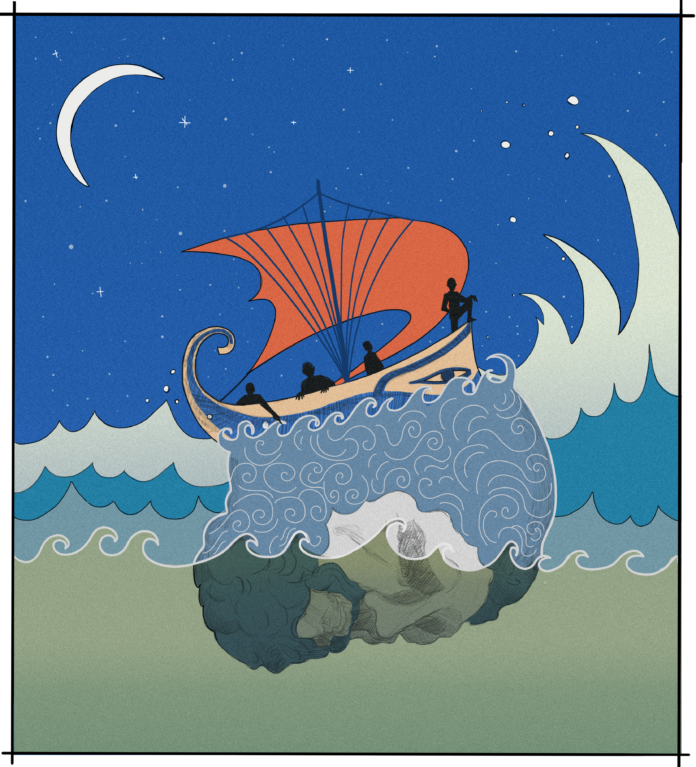
In the wake of the brand-new adaptation of the epic ‘The Odyssey’, the subject of masculinity rears its head. How does Nolan’s decision to change the character of Odysseus reflect on the shared culture of men around the world when it comes to masculinity, and how do men view his changes? What effect does it have? Fictional characters do have influence on, and are a reflection of, the culture we live in, either for the benefit of society or the destruction of the evolution of our spirit, culture, and workforce.
It’s been around ten years since a major Greek epic has been shown in theaters and twenty years since audiences actually enjoyed an ancient epic of any kind. How does Nolan’s adaptation of the Odyssey compare to the original? He modernizes the story. The original hero, Odysseus, was a more traditional hero who was not morally opposed to raping, pillaging, and taking slaves. Clearly, the times have changed, at least in most countries, and this would never sit well with modern audiences. Or I may be mistaken. In the dark corners of the world, some will view Odysseus as a weak masculine figure as this adaptation diverges from the source material. Elon Musk himself paraded the idea of using his AI tool, Grok, to create a faithful adaptation of Homer’s epic and even created a trailer for it with all-white people. Although there is little evidence of Musk’s opinion on the character Odysseus, other far-right and right-wing viewers claim the character Odysseus is weak and woke. Nolan himself does not support the ancient hero archetype. Instead, he gives Odysseus a heart, making him feel deep regret for taking over the city of Troy and murdering its people. This is what many have a hard time with.
I believe this gives Odysseus more depth and makes him more relatable to modern non-psychopathic audiences. Of course, they are not psychopaths, but are misled by political leaders and others with strong political influence. I find it hard to believe these viewers actually think it would be better to have a warmongering rapist, slave-master hero and instead are caught up in the political zeitgeist of the world and want to hate what is progressive. They believe the issue is black and white and have to be all in on hating everything about the movie. Real-life rapist slave masters are hated almost universally by the very people claiming Odysseus is a weak masculine hero. Look at any African warlord, Epstein, or terrorist put in the public eye. Right-wingers hate them too, but a significant number of them want a similar figure presented as a hero. Now, is there any validity in wanting to stick to the source material and have a more traditional male figure as the lead?
As for sticking to a traditional hero, should we portray Ip Man as having the flaws he truly did? He had a mistress; he left his wife and child behind, yet these facts were abandoned in the movies in order to have a more likable hero. What is a hero? A hero is an example of the ideal man or woman, not a ruthless tyrant like Odysseus in the original story. A hero is someone whom all those who strive to be good men look up to, at any age, if they’re humble. This aspiration in the soul of most men is one of the most powerful forces driving society to benefit all of humanity. It’s not simply a cool character in a story that little boys look up to. Is it important for the hero to be flawless or flawed? A flawed hero gives a more realistic goal to those in pursuit of greatness.
However, modern-day flaws compared to ancient flaws are vastly different. Odysseus, the slaver, rapist, and murderer, is morally worse than an adulterous warrior, as he is portrayed in Nolan’s adaptation, and Ip Man as well. So, the argument that Odysseus is simply a fictional character and his moral decisions don’t matter is false. He inspires many men, and especially children, as their brains are generally more malleable. It not only inspires movie watchers, but also inspires the next Christopher Nolan or Ridley Scott to make heroes with deplorable morals and can foster a culture of evil through the influence of cinema. This is dangerous for a society that seeks to benefit the well-being of its citizens.
There is a massive audience that supports deplorable individuals in society. Starting with those of less influence and power, many bullies become famous and rich. Their toxicity is entertainment to the masses. All over Elon’s website, X, you will find countless mean posts from celebrities, regular people, and influencers. For example, Leslie Jones’ appearance was mocked horrendously back when it was known as Twitter. Most of the memes made about her appearance were racist. “I feel like I’m in a personal hell. I didn’t do anything to deserve this. It’s just too much. It shouldn’t be like this. So hurt right now.” She took to the platform to express her pain. Even the new actor playing Harry Potter in the HBO show is being made fun of for his appearance, and he’s only around ten years old. This is evidence that toxic-thinking individuals exist. Now, take a look at some toxic celebrities. Countless gangster rappers, Andrew Tate, and even the president of the United States fan the flames of deplorable and, in some cases, downright demonic behavior.
Mike Tyson, touted as an old soul who’s conquered his demons and now gets high off marijuana while dispensing wisdom to his many fans, appears in movies, TV, and his own Netflix documentary, and everyone’s forgotten his horrific past. He’s been convicted of rape and assault multiple times. He even abused his wife Robin Givens and admitted to it on TV. The public hated Robin Givens. Could Mike Tyson be a better man now? Sure. But where does society draw the line on rewarding people who commit monstrous crimes? In Mike Tyson’s case, and with people like him who committed ungodly acts in the past, most people forget their misdeeds as the wheel of time ticks away. Plus, there’s a lot of money and PR involved in keeping their public image in a positive light. Even murderous gangster rappers like King Von are worshipped by fans. Instead of seeing the tragedy of another human being killed, they praise him for being a “real” man for actually committing the crimes he raps about. P. Diddy has had a career for over a decade and continued performing for adoring fans. What kind of person goes to the concert of a murderer? Either an evil person or someone who is simply ignorant of the misdeeds or apathetic to their crimes.
To some, it’s separating the art from the artist. As long as they make their record label money, nothing will change. Another interesting case is Andrew Tate. A no-nonsense, supposed man’s man, appealing mostly to young men, who built his empire on pornography and manipulating lonely and vulnerable men into giving him millions of dollars. He and his brother, Tristan Tate, are currently facing human trafficking charges and charges involving a minor in their operations. It’s possible that ignorance of their crimes leads to unwavering loyalty from their followers, or perhaps it’s the refusal to see their idol for who he truly is. Then you have influencers idolized by children, such as Neon and Jack Doherty, famous for being public nuisances and teaching children it’s okay to disturb people’s peace of mind.
Figures like Donald Trump or Andrew Tate are seen less as spiritually sound influences for men to follow, like Gandhi, Martin Luther King Jr., or Abraham Lincoln, and more as figures resembling the archetype of the antihero, which is a popular archetype in fiction and reality. They are foul-mouthed, bold, and are perceived by their supporters as fighting for the people. The appeal of the antihero blurs the line between fiction and reality. They are popular, and their characters are loved by millions of people. Travis Bickle from Martin Scorsese’s Taxi Driver, Light Yagami from Death Note, or even Walter White in Breaking Bad, to name a few. While fiction can be more inspiring than reality at times, there’s no denying the power and influence of a real antihero. Political assassins such as the killer of Charlie Kirk, Tyler Robinson, and Luigi Mangione are praised by many for their vigilantism. Even school shooters inspire other school shooters, as seen in the manifesto of the Virginia Tech shooter. He looked up to the Columbine shooters. These murderers aren’t antiheroes because they’re doing the right thing; it’s the fact that people’s subjective realities place these killers in the category of the antihero, as they believe they’re committing violent acts for the greater good. This is the danger of negative influence and has been throughout the history of mankind.
Why does the antihero appeal to so many men? For one, people are willing to look past character flaws as long as the antihero does something profoundly good. Two, a good number of men like the “bad boy” type of personality. The answer is obvious for many teenagers: they want to be the bad boy, as they often enjoy breaking rules, coming out on top in arguments, or being the most dominant in a group of people in order to achieve higher social status. With higher social status, they have access to women, friends, and money, and they can get into fraternities that can benefit their careers in the long run. With testosterone coursing through their bloodstream combined with an underdeveloped brain, it’s clear there is a biological component to this. Many of these teenagers grow up and their brains develop, leading them to make wiser decisions. There’s also the factor of having healthy male role models in their lives to guide them into making wiser decisions. Often, the “bad boy” role falls to the wayside as the adult world shuts down poor and selfish behavior. Being the “bad boy” doesn’t give you higher social status in most cases. However, as mentioned before, these antihero figures do gain power and influence. So, what makes the antihero appeal to grown men? Perhaps it’s the appeal of someone speaking their truth or a shared truth, despite the consequences. This is viewed as bravery, and men respect bravery. The antihero appeals to the inner child or maybe the inner teenage boy. Of course, not every male is the same.
Bad influences can disrupt the thriving of a culture. If everyone’s goal is capital gain at the expense of their neighbor, like Donald Trump or Andrew Tate, peace and freedom die along with the cultural values of the specific society. Most cultures and religions value treating your neighbor with compassion and kindness. When taken away, the world becomes dark and desolate. Depression, suicide, crime, violence, etc., ensue, and so humanity falls into the abyss of extinction. With these societal ailments, institutions fail and governments fail because the people running the infrastructure of the country can’t work at optimal efficiency. The weakest link and most easily influenced group of the population are those with the least developed brains: children and teens. If any one group could be influenced by immoral influencers, it’s them, and they do listen to the Andrew Tates. While it’s hard to get an exact headcount of how many youths know about Andrew Tate, surveys have been conducted and prove that most know who he is. There is no doubt that these influencers have already taken the minds of some children who will repeat the cycle and grow up to be their own version of Andrew Tate. Many will suffer because of their wrongdoings. The opposing forces of good and evil will continue in conflict. There are too many good influencers in the world for evil to fully take over and collapse society.
So, the hero or leader of a story, and especially in real life, can influence many people with their morals. They can influence many creators. Many creators making similar heroes can influence cultures. Cultures shape societal beliefs and morals. Nolan’s choice of changing the hero of ‘The Odyssey’ into a man with modernized morals is more realistic and relatable. Most people will follow a humbler or more noble leader in real life, and this version of Odysseus is more relatable because most people aren’t rapists or slave masters. Many might point to Donald Trump to counter my argument, as many believe he is a racist and a rapist, but most of his followers don’t believe the flaws and accusations made against Trump, except for the evil minority on the far right. They call it fake news. What’s more important is their idea of who Trump is, and that idea of who they think Trump is contains the hallmarks of a great leader such as Gandhi or MLK. Some would go so far as to compare him to Jesus Christ.
This is just to prove my point that men follow those who they believe exhibit the qualities of a great leader and to highlight the importance of leaders in stories. If someone believes Nolan’s version of Odysseus is weak and woke, they are either evil or brainwashed by conservative propaganda. But the conservative view has valid points about historical accuracy in film. Overall, the change of Odysseus from traditionally masculine to a more compassionate man is a necessary and wise decision because it makes him more relatable, can influence society in a way that benefits the well-being of the average person, and adds depth to the character. This isn’t the first time Nolan has adapted a great story and succeeded in doing so, and it won’t be the last. His decision-making remains on par with his other great films, and people should see ‘The Odyssey’ for a great time. The influence of his adaptation of Odysseus, in my opinion, benefits the world for the greater good.


